Core Concepts and Key Technical Principles
A Power Capacitor With Harmonic Suppression integrates Reactive Power Compensation with harmonic filtering mechanisms to provide a dual function in industrial power networks:
Reactive Power Compensation – The Capacitor bank stores and releases reactive energy to balance the phase difference between voltage and current, improving the power factor and reducing active power losses.
Harmonic Suppression – Harmonics generated by nonlinear loads distort the waveform of the system voltage, resulting in overheating, vibrations, and premature aging of electrical equipment. By incorporating series Reactors or passive/active filtering elements, the capacitor attenuates specific harmonic frequencies, typically between the 2nd and 50th harmonics.
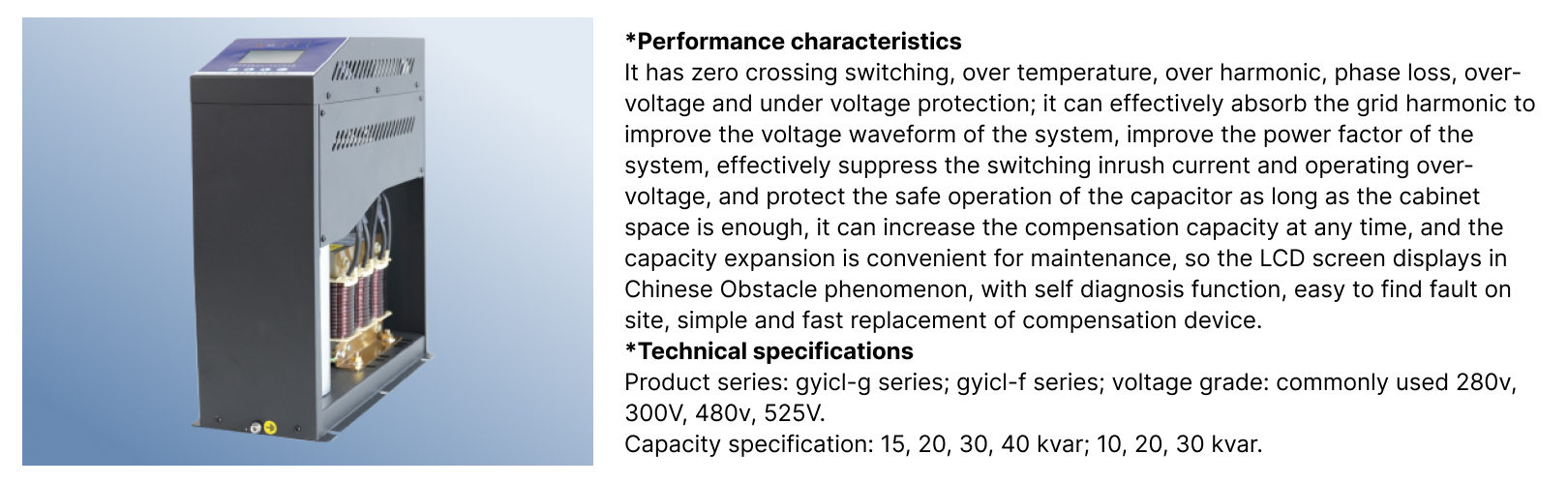
Advanced models implement zero-crossing switching to minimize switching transients, overvoltage and undervoltage protection to safeguard the system under abnormal conditions, phase-loss monitoring, and overtemperature protection to prevent thermal damage. These features collectively enhance system stability and prolong the service life of the capacitor and connected equipment.
The inclusion of an LCD screen with diagnostic functionality provides on-site visibility of operational anomalies and simplifies fault identification, making maintenance faster and reducing downtime. Such monitoring allows operators to proactively respond to abnormal conditions rather than reacting after failures occur.
Product Structure, Performance, Materials, and Manufacturing
Structural Overview
Power capacitors with harmonic suppression typically consist of:
Capacitor Cells – Constructed with high-quality dielectric materials, such as metallized polypropylene film, which provide high dielectric strength and long-term reliability.
Series Reactor – A dry-type iron-core reactor placed in series with the capacitor to limit harmonic resonance and inrush currents, enhancing harmonic suppression.
Protection and Control Unit – Integrated circuits or microControllers manage the protective functions (overvoltage, undervoltage, overcurrent, overtemperature) and facilitate digital monitoring.
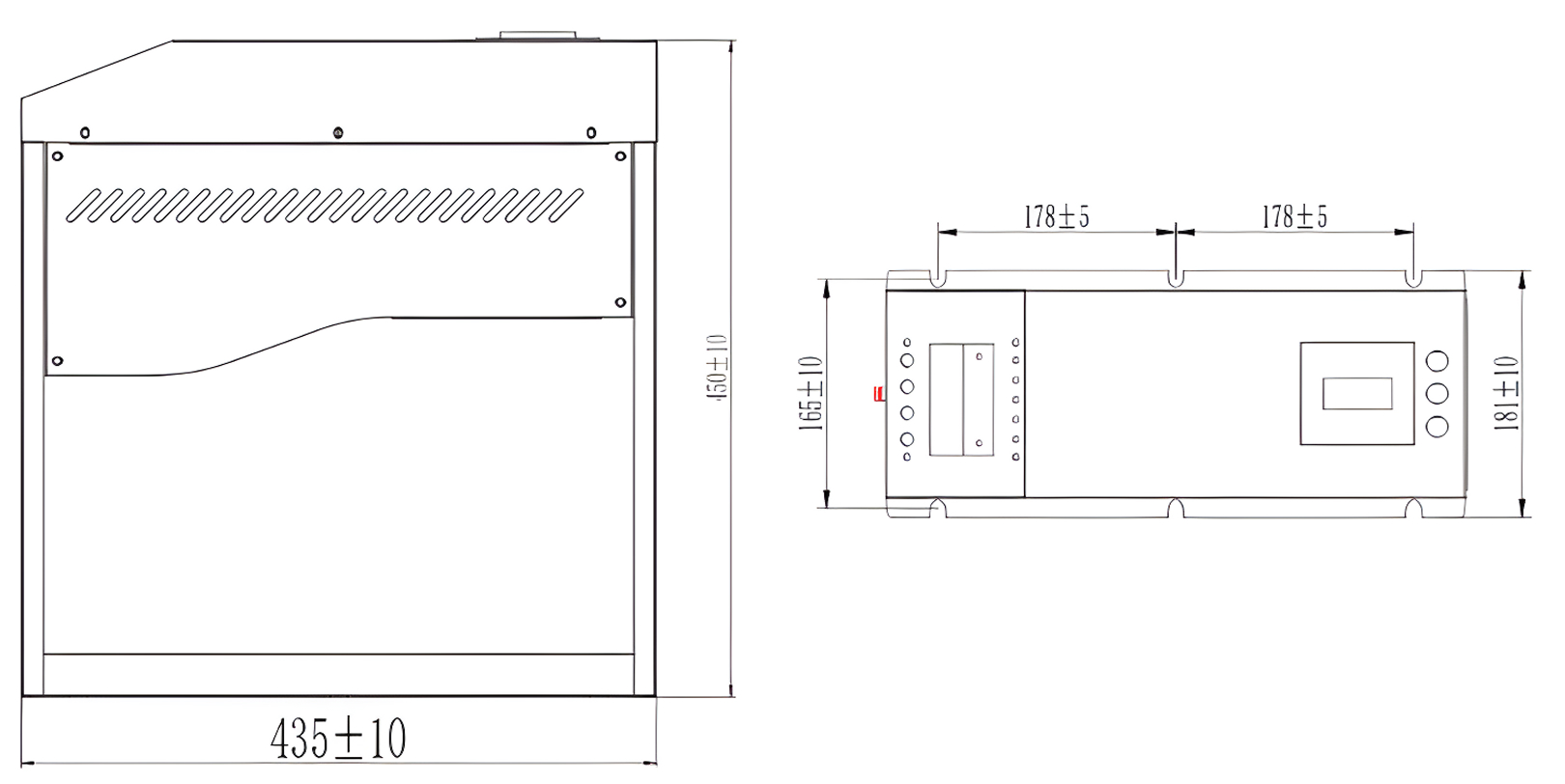
Cabinet Interface – Designed for easy integration into low-voltage compensation cabinets, with modular arrangements allowing flexible capacity expansion.
Performance and Technical Specifications
Voltage Ratings: 280 V, 300 V, 480 V, 525 V
Capacity Ratings: 10–40 kvar, depending on the series and application requirements
Protection Features: Zero-crossing switching, overtemperature, overvoltage, undervoltage, phase loss, and over-harmonic protection
Noise Level: Engineered to operate with minimal acoustic impact in industrial environments
Capacity Expansion: Modular design permits incremental capacity addition, enabling scalable solutions without large system redesigns
Manufacturing and Material Considerations
High-quality capacitors utilize film metallization and epoxy encapsulation, ensuring minimal leakage, mechanical robustness, and excellent thermal endurance. Series reactors are wound with high-purity silicon steel laminations to reduce eddy current losses while maximizing magnetic flux stability. Advanced assembly processes ensure precise alignment and consistent contact quality, which are critical for reliable operation under frequent switching conditions.
Key Factors Affecting Quality and Performance
The operational success of a power capacitor with harmonic suppression depends on several factors:
Voltage and Current Ratings Accuracy – Selecting capacitors that match or slightly exceed system voltage avoids overvoltage stress while optimizing reactive power correction.
Harmonic Profile Consideration – Accurate harmonic analysis of the site is necessary to determine the optimal reactor and filter design to prevent resonance and ensure effective suppression.
Thermal Management – Adequate spacing, airflow, and heat-resistant materials are necessary to prevent thermal runaway, particularly in high-density cabinets.
Switching Technology – Zero-crossing switching reduces transient spikes, prevents capacitor overvoltage, and extends component lifespan.
Maintenance Accessibility – Modular designs with diagnostic LCDs facilitate quick identification of faulty components and simple replacement, reducing operational downtime.
Supply Chain and Supplier Selection Criteria
Selecting a reliable supplier of power capacitors with harmonic suppression is critical for industrial applications:
Standards Compliance: IEC 60831 and equivalent certifications ensure the capacitor can safely operate under industrial load conditions.
Documentation and Support: Complete datasheets, wiring diagrams, and on-site installation guidance facilitate safe integration and troubleshooting.
Component Quality: Proven dielectric films, high-purity metals for reactors, and microcontroller-based protection units contribute to long-term reliability.
Engineering Expertise: Suppliers that provide harmonic analysis support, system design guidance, and after-sales service reduce operational risk.
Traceability and Certification: ISO 9001-certified manufacturers with component traceability ensure consistent quality and warranty compliance.
Common Challenges and Industry Pain Points
Harmonic Overload
Nonlinear loads can produce harmonic currents that exceed acceptable limits. Without proper suppression, this leads to voltage distortion, transformer overheating, and equipment failure.
Inrush Currents
Capacitors switched under load can draw high inrush currents. Series reactors and zero-crossing switching are essential to mitigate these transients.
Maintenance and Fault Detection
Operators face challenges in quickly identifying and replacing faulty capacitors. Integrated LCD diagnostic screens significantly simplify this task, minimizing downtime.
System Design Complexity
Correct sizing of capacitors and reactors requires detailed load analysis and harmonic evaluation to ensure both efficient compensation and resonance avoidance.
Application Scenarios and Industry Use Cases
Industrial Manufacturing Facilities
High-power motors, welding machines, and production lines create reactive loads and harmonics. Power capacitors with harmonic suppression stabilize voltage and improve power factor, reducing energy costs and equipment wear.
Renewable Energy Integration
Photovoltaic inverters and wind turbines introduce dynamic reactive power variations. SVG-integrated capacitor solutions provide fast and precise compensation, improving grid compliance.
Commercial Buildings and Data Centers
Reactive compensation and harmonic suppression reduce energy losses, prevent voltage sags, and maintain reliable operation of sensitive electronic equipment.
Distribution Substations
Capacitors with harmonic suppression improve network power quality, reduce transmission losses, and maintain voltage levels across medium- and low-voltage networks.
Current Trends and Future Directions
Digital Monitoring and Diagnostics: Enhanced LCD and networked monitoring allow predictive maintenance and remote fault detection.
Hybrid Compensation Systems: Combining capacitors with Active Power Filters and SVGs addresses both reactive power and harmonic distortion comprehensively.
Modular, Scalable Designs: Compact, stackable modules enable gradual capacity expansion without major system overhaul.
Advanced Materials: Improved dielectric films and reactor core materials enhance thermal stability, reduce losses, and increase service life.
Frequently Asked Questions (FAQ)
Q: What is the main advantage of a power capacitor with harmonic suppression?
A: It simultaneously improves power factor and mitigates harmonics, protecting equipment and enhancing voltage stability.
Q: Can these capacitors be used in high-harmonic environments?
A: Yes, series reactors and protection features are specifically designed to handle harmonics up to the 50th order.
Q: How is maintenance simplified?
A: Integrated LCD diagnostic screens allow operators to quickly identify faults and replace modules without extensive downtime.

 English
 Español
 Portugues
 Pусский
 Français
 Deutsch
 日本語
日本語
 한국어
한국어
 العربية
 Italiano
 Nederlands
 Polski
 Türk dili
 हिन्दी
 Indonesia
 Melayu
 dansk
dansk
 Magyar
 қазақ
қазақ
 বাংলা
বাংলা
 עִברִית
 čeština
 українська
 беларускі
 Filipino
 Suomalainen
 اردو
اردو
 հայերեն
 български
 Hrvatski
 galego
 नेपाल
नेपाल
 euskara
 Shqipëria
 Malagasy
 Башҡорт
 Türkmenler
 Ilocano
 Нохчийн





 Whatsapp
 Telefon